




CLEARWATER BEACH, FLA. -- Looking for the perfecd birdwatching vacation? My bare toes are sinking into unimaginably soft white sand. On my left, ocean waves wash the beach, while brilliant sunshine makes me thankful for my sunglasses. I'm inching forward, approaching a tricolour heron -- it's a bit smaller than the more familiar great blue heron. As though mimicking me, it alternately stands statuesquely or, in that stately manner of its species, stalks grandly through the shallows, hunting for its prey.
Binoculars in hand, digital camera at the ready, I am exploring Florida's Fort De Soto Park, a recreational area overlooking Tampa Bay near St. Petersburg. Dotted along the broad sweep of beach, other birdwatchers can be seen, moving erratically just like me.
Last December, when I visited west-central Florida's St. Petersburg, Tampa and Clearwater region, I spent as much time as possible at three sites on the Great Florida Birding Trail.
Known as the GFBT, the trail links notable destinations for birdwatching throughout the state. By 2006, this 3,200-kilometre route should include more than 400 sites, extending from Gainesville to St Petersburg. It is a birdwatcher's heaven.
Florida is an excellent birding destination because of its year-round opportunities. The mild climate, as well as the state's many habitats, attract more than 470 species -- some resident, others migratory visitors. Some residents are rare, such as the Florida burrowing owl and the Florida scrub-jay.
As happens annually, many activities are planned this spring along the trail for novice and experienced birders alike. Many events are free, but sometimes a fee is charged if a bus or van is to be shared by participants.
I was keen to experience as many sites along the trail as I could. Because I was staying in St. Petersburg, East Beach at Fort De Soto Park made a delightful place to start.
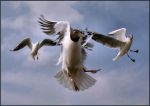
On the park's ocean-facing side, white-sand beaches extend as far as the eye can see. There, shorebirds such as least sandpipers scuttle about in the surf, while laughing, ring and herring gulls wheel about on the breeze overhead. On the leeward, protected side of the park, salt marshes, mangroves, mudflats and other habitats support a wide variety of waders like oyster catchers, and raptors such as osprey.
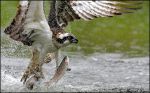
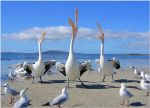
In fact, while I walked the beach, camera at the ready, an osprey assessed me from its perch atop a dead tree. My attention, however, became fixed upon a group of brown pelicans grooming themselves and snoozing on the sand.
Pelicans are one of my favourite birds. Although they appear ungainly on land, they are amazing acrobats in flight, with a wingspan of up to two metres. Their most notable feature is undoubtedly their beak pouch, which they flap to cool their body temperature.
From Fort De Soto, I headed north to Brooker Creek Preserve, a 3,440-hectare GFBT destination near Tarpon Springs. Although the preserve itself was created in 1992, its Environmental Education Center opened this past December. Inside there are many superb interactive models -- adults and kids will find crawling through a larger-than-life gopher tortoise tunnel a fun and educational experience. The centre's wheelchair-accessible boardwalk wends through the wetlands, ensuring that everyone can take in Brooker Creek regardless of age and abilities. There is also an extensive network of hiking trails for those wishing to take a self-guided day hike into the surrounding woods in search of birds. Guided hikes are also available on a daily basis (by reservation only).
Bruce Rinker, division director at the preserve, welcomed me when I arrived at the centre. Affable and informed, he explained that more than 180 different species of birds can be seen here. Habitats include upland flatwoods (look for wild turkeys and kestrels), freshwater marsh (wading birds and sandhill cranes), and open areas (eastern bluebirds).
From the boardwalk, a sharp-eyed visitor found a thick-bodied black snake curled up, snoozing on a fallen tree trunk beside the creek. "A good spotting," noted Rinker, who identified it as a rat snake after examining my sketch of its field markings. It was an exciting sighting for me, making a new addition to my reptile list. This is another aspect I enjoy about birding: wherever you are, there are new species to see, hitherto unknown facts and habits of wild creatures to discover.
From Brooker Creek Preserve, I drove south to the Hillsborough River, a 6,475-hectare wilderness preserve only a half-hour's drive from Tampa. Here, I spent three hours paddling a canoe with my naturalist-guide Joe Faulk, owner of Canoe Escape. Happily, he operates the only outfitter in the preserve, meaning you won't be jostling with other companies for the best place to view wildlife on the river.
I was particularly taken by the vast flocks of white ibis perched like fluffy puffballs in the trees. Suddenly, hundreds took flight simultaneously. "Whatever you do, don't look up!" Faulk cried. But as their droppings splashed about me, I shot image after image of the flying birds, dramatic against an azure sky. (Note to self: continue to wear the wide-brimmed hat.)
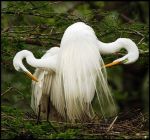
While on the meandering Hillsborough River, I added several species to my life list: wood storks, green herons, reddish egrets, red-shouldered hawks and black vultures. As well, I reacquainted myself with some birds that, although already on my list, don't visit my home region. These included tufted titmouse, little blue heron, anhinga, great white heron, great egret and snowy egret. Although my guide hoped to show me wild boars, we didn't see any, although there were numerous alligators and Florida red-bellied turtles, all basking on half-submerged logs.
Before leaving Florida, however, I made a last bird-related stop, to Clearwater Beach's Suncoast Seabird Sanctuary. It is America's largest wild-bird hospital and operates solely on donations. Bird-lover and zoologist Ralph T. Heath Jr. felt compelled to start the care centre in 1971 after finding a wounded bird walking along Gulf Boulevard. He contacted a vet, arranged for surgery, and when word of mouth spread, he suddenly found himself operating a bird sanctuary-cum-hospital in his own backyard.
Today, the Suncoast Seabird Sanctuary is home to 600 or more birds, so it is an excellent way to see species up close. And, if you're trying to develop your children's interest in birds, seeing these creatures being cared for like this is nothing short of inspiring. I saw burrowing owls, saw-whet owls, red-tailed hawks, cardinals, cormorants, black-crowned night herons and many more species too numerous to list. Birds that can be saved and released are, but many become permanent residents because their injuries are extensive.
I recommend you time your visit, like I did, to feeding time both in the sanctuary and outside, on the beach. I was intrigued to see how adept the pelicans were at flipping fish around in their pouches.
If you're a birdwatcher, or simply keen about nature, consider taking in a destination or three along Florida's Great Birding Trail. And wherever you are on or off this trail, keep your eyes peeled: You never know what you'll see. For instance, while sailing off St. Petersburg beach on a Dolphin Landings Charter Boat, I was scanning the sky with my binoculars and discovered a frigate bird flying overhead. This was pure serendipity -- and another exciting first for me.
Pack your bags
BIRD SANCTUARIES
Fort De Soto Park (near St. Petersburg): fortdesoto.com.
Brooker Creek Preserve (near Tarpon Springs):
friendsofbrookercreekpreserve.org.
Suncoast Seabird Sanctuary (near Clearwater): seabirdsanctuary.org.
TOURS
Dolphin Landings Charter Boat Center: http://www.dolphinlandings.com; 727-360-7411.
Canoe Escape (near Tampa): 813-986-2067; http://www.canoeescape.com.
MORE INFORMATION
For more information on the Great Florida Birding Trail, visit
http://www.floridabirdingtrail.com and click on "Birding Events in Florida" to find the list of organized spring birding excursions.
For general information, visit http://www.visitflorida.com.
For more birdwatching information, visit http://www.visitflorida.com
experience/nature/birding.
 site_map
/body>
site_map
/body>
